Why Cannabis Dispensaries Can Feel Like Health Food Stores in New Mexico
Last Updated: May 2026. Cannabis laws, safety guidance, and product rules can change, so check official New Mexico sources and product labels for the most current information.
TL;DR: Dispensaries can feel like health food stores because many shoppers ask similar questions about labels, ingredients, plant-based products, serving guidance, and what fits their comfort level. The big difference is that cannabis is regulated, age-restricted, and can be impairing when THC is involved. Bud Board Dispensary is not a health food store, but the shopping experience can feel familiar because good cannabis shopping is built around education, clear labels, and asking the questions before your cart starts making decisions for you.
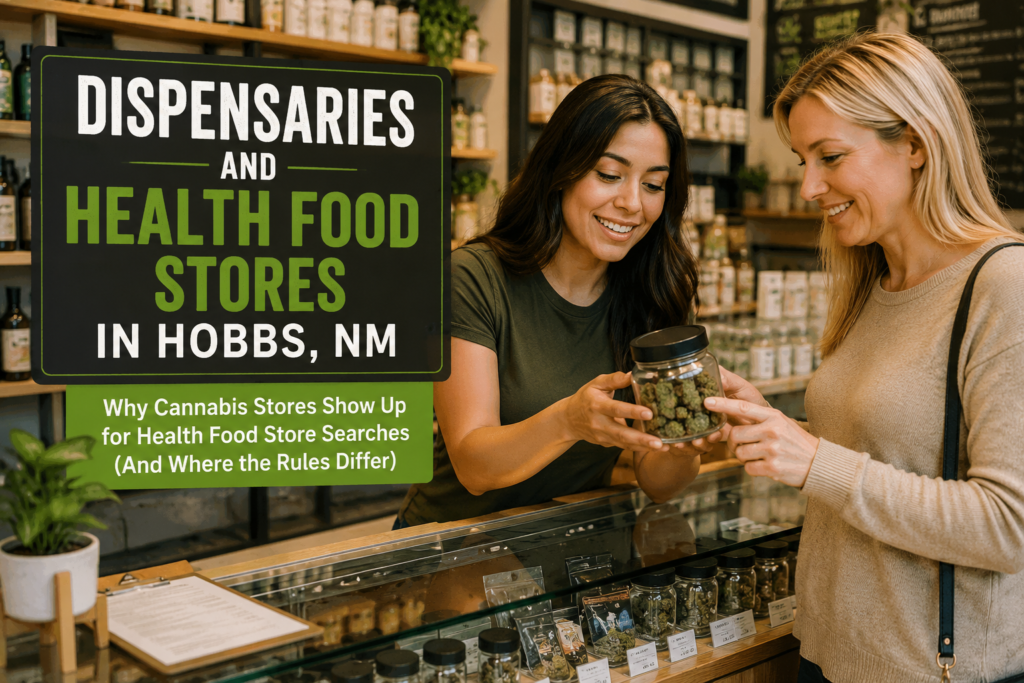
If you have ever searched for a health food store in Hobbs, NM and noticed a cannabis store showing up nearby, you are not imagining things. Google is not confused in the “putting your keys in the fridge” way. There is real search overlap there.
Many people who search for health food stores are looking for natural products, wellness-focused shopping, clean labels, and staff who can explain unfamiliar options without making them feel like they walked into a final exam. Cannabis dispensaries can overlap with that behavior, especially when shoppers are comparing THC, CBD, edibles, topicals, flower, tinctures, terpenes, and product labels.
The comparison makes sense, but it has limits. Cannabis is not the same as buying tea, vitamins, protein powder, or local honey. THC can impair coordination, perception, reaction time, and decision-making, so responsible shopping matters from the start.
Quick Comparison: Dispensary vs Health Food Store
- Both involve label reading: Shoppers want to understand ingredients, serving guidance, product type, and what they are buying.
- Both attract curious shoppers: Many people ask beginner questions before they feel comfortable choosing.
- Both can feel wellness-oriented: The shopping behavior may overlap when people are looking for plant-based options.
- Cannabis has stricter rules: Dispensaries are age-restricted, regulated, and must treat THC products with more caution than ordinary wellness products.
- Good guidance matters: A helpful dispensary should make the shopping process clearer, not more intimidating. Nobody needs a scavenger hunt with a receipt at the end.
What New Mexico Shoppers Should Know First
New Mexico allows adult-use cannabis for adults 21 and older, and the state regulates adult-use and medical cannabis through the Cannabis Control Division. That state-regulated structure is part of why a licensed dispensary should feel organized, compliant, and education-focused.
For shoppers, the basics are simple: bring valid ID, follow New Mexico rules, do not drive impaired, keep cannabis away from children and pets, and do not take cannabis across state lines.
Official source: New Mexico Cannabis Control Division: Cannabis in New Mexico
Why Cannabis Stores May Show Up When People Search Health Food Stores in Hobbs, NM
Some Hobbs shoppers search for health food stores because they want natural products, wellness-focused shopping, label guidance, and staff who can explain unfamiliar options. Cannabis dispensaries can sometimes overlap with that search intent because many adult shoppers ask similar questions about ingredients, product formats, serving guidance, THC, CBD, and responsible use.
Bud Board is not a health food store, and cannabis should not be treated like an ordinary wellness product. The connection is the shopping behavior. People want clear answers, safe guidance, and help understanding what they are buying before they make a decision.
If you are comparing health food stores and dispensaries in Hobbs, the most important difference is regulation. Licensed New Mexico dispensaries are age-restricted, cannabis products can be impairing, and cannabis purchased in New Mexico should stay in New Mexico.
That is the whole plot twist. Same curious-shopper energy, much stricter rulebook.
Why Do People Compare Dispensaries to Health Food Stores?
People make the comparison because both places attract shoppers who want a more informed purchase than a quick grab-and-go item. A health food shopper may ask about ingredients, serving directions, or how a product fits into their routine. A dispensary shopper often asks similar practical questions, just in a more regulated category.
The overlap is most obvious with beginners, older adults, wellness-minded shoppers, medical cannabis patients, and visitors who want to understand New Mexico rules before buying. They are not always looking for the strongest option. Many are trying to understand the menu without feeling embarrassed for asking basic questions.
That is where a knowledgeable dispensary team matters. The experience should feel clear, calm, and useful. Nobody should need a cannabis glossary, a folding chair, and a snack break just to understand the menu.
What Questions Sound Similar?
The questions in both settings often come from the same place: people want to understand what they are putting in or on their body.
Common dispensary questions include:
- What should I know before trying this?
- How do edibles compare with inhaled products?
- What does this label mean?
- How long should I wait before deciding how I feel?
- What is the difference between THC and CBD?
- What should a beginner avoid overdoing?
- How should I store this safely at home?
Those are not silly questions. Those are responsible shopper questions. If labels had a “please explain this like I’m normal” button, half the world would press it.
How Is Cannabis Shopping Similar to Natural Wellness Shopping?
The similarity is mostly in the shopping behavior. People compare plant-based options, read labels, ask about formats, and want someone to explain unfamiliar terms in plain language.
For cannabis, those terms may include THC, CBD, cannabinoids, terpenes, edibles, tinctures, flower, pre-rolls, topicals, and serving guidance. For a newer shopper, that can feel like standing in the supplement aisle and realizing every bottle brought its own tiny novel.
The CDC explains that cannabis contains more than 100 cannabinoids, including THC and CBD. CDC describes THC as intoxicating and CBD by itself as not causing a high, which is a useful starting distinction for beginners.
Official source: CDC: About Cannabis
Where the Health Food Store Comparison Has Limits
This is where the comparison needs guardrails. Cannabis is not an ordinary wellness product. THC products can impair coordination, perception, reaction time, and judgment. Cannabis can also interact with alcohol and other substances in ways that increase impairment.
Dispensary staff can explain product types, labels, formats, and responsible shopping practices, but they should not diagnose health conditions or tell someone to replace medication. People with medical concerns, pregnancy concerns, prescription medications, heart concerns, mental health concerns, or a history of substance use issues should talk with a qualified healthcare professional.
A better way to say it is this: a good dispensary can borrow the educational feel of a health food store, but it has to operate with stricter safety, legal, and compliance standards.
Official source: CDC: Cannabis Health Effects
What Does a Consultative Dispensary Visit Look Like?
A rushed visit sounds like, “What are you buying?” A better visit sounds like, “What are you trying to understand?”
That difference matters. A good dispensary team helps shoppers slow down, compare product types, understand labels, and avoid common beginner mistakes. For edibles, that may mean explaining that timing can be different from inhaled cannabis. For flower or pre-rolls, it may mean talking through category labels without treating them like guarantees.
The goal is not to pressure someone into buying more. The goal is to help them leave less confused than when they walked in. Glamorous? Maybe not. Useful? Absolutely. Like finding the good parking spot on the first loop.
Why Medical Claim Boundaries Matter
Cannabis is often discussed in wellness conversations, but responsible dispensary education needs careful wording. The National Center for Complementary and Integrative Health states that the FDA has not approved the cannabis plant for any medical use, although the FDA has approved certain drugs that contain individual cannabinoids.
The FDA also states that it has not approved other cannabis, cannabis-derived, or CBD products currently available on the market. That is why Bud Board-style educational content should avoid cure claims, treatment claims, and promises about specific outcomes.
In plain language: customers can ask questions, staff can explain categories, and product labels can be discussed. Medical decisions belong with licensed healthcare professionals. That is not the fun sentence, but it is the responsible one.
What Misconceptions Do People Have About Dispensaries?
One common misconception is that dispensaries are only for experienced cannabis shoppers. Another is that every customer is chasing the strongest product on the shelf. In reality, many shoppers are asking simple, practical questions.
Some people want to know how edibles work. Some want to understand THC and CBD. Some are visiting New Mexico and need to know what is allowed. Others simply want to walk in without feeling like everyone else already knows a secret handshake.
A better dispensary experience makes room for all of that. It should feel normal to say, “I’m new to this. Can you explain the difference?” That sentence may not win a poetry contest, but it is undefeated at getting useful help.
How Should Beginners Shop With a Wellness Mindset?
Beginners should shop slowly, ask questions, read labels, and be honest about their experience level. That simple approach can prevent a lot of uncomfortable first experiences.
For edibles, pay close attention to serving guidance and timing. For inhaled products, understand that onset and duration can differ from edible products. For topicals, read the label and ask how the product is intended to be used. For CBD-forward products, remember that non-intoxicating does not mean “skip the label.” Labels are tiny, but they are mighty.
Beginner-friendly shopping questions: What should I know before trying this? How do I read this label? How long should I wait? What should I avoid overdoing? How should I store it safely?
Is Cannabis Actually “Healthy”?
The most accurate answer is more careful than a simple yes or no. Cannabis is a regulated plant-based product that some adults use for personal or medical reasons. It is not universally healthy, risk-free, or right for everyone.
How someone responds can depend on the product type, THC amount, serving size, frequency of use, personal health history, age, medications, and tolerance. Research continues to develop, and official agencies make a clear distinction between approved cannabinoid medications and general consumer cannabis products.
The most wellness-minded approach is to learn first, ask questions, follow the label, and avoid treating cannabis like an ordinary supplement. Basically, let curiosity drive, but make responsibility hold the map.
Key Takeaways
- Dispensaries can feel like health food stores when the focus is education, label reading, natural product curiosity, and customer comfort.
- Some cannabis stores may appear for health food store searches in Hobbs, NM because the search intent can overlap around natural products, wellness shopping, and label guidance.
- Bud Board is a licensed cannabis dispensary, not a health food store.
- Good dispensary questions are practical: what does the label mean, how does the format work, and what should a beginner know?
- The comparison has limits because cannabis is regulated, age-restricted, and can impair when THC is involved.
- Dispensary staff can educate, but they should not diagnose conditions or replace medical advice.
- Bud Board’s role is to make cannabis shopping clearer, more comfortable, and more responsible for New Mexico shoppers.
FAQ: Are Dispensaries Like Health Food Stores?
Are dispensaries really like health food stores?
Yes, in some ways. Both can involve label reading, ingredient questions, product comparisons, and personalized shopping help. The difference is that cannabis is regulated, age-restricted, and may impair you when THC is involved.
Why do cannabis stores show up when people search for health food stores in Hobbs, NM?
Some cannabis stores may appear near health food store searches because the search intent can overlap. Shoppers may be looking for natural products, wellness-style shopping, label guidance, and staff who can explain unfamiliar options. Bud Board is not a health food store, but the shopping behavior can feel similar.
Can dispensary staff give medical advice?
Dispensary staff can explain product categories, labels, formats, serving guidance, and responsible shopping practices, but they should not diagnose conditions or replace advice from a licensed healthcare professional.
What should a beginner ask at a dispensary?
A beginner can ask what the label means, how the product format works, how long to wait, what to avoid overdoing, and how to store the product safely at home.
Why do older adults compare dispensaries to wellness stores?
Older adults often ask practical questions about labels, serving guidance, product format, and comfort level. That can feel similar to asking about supplements or natural wellness products, although cannabis requires more caution.
Is CBD the same as THC?
No. CDC describes THC as intoxicating and CBD by itself as not causing a high. Product labels still matter because cannabis and hemp-derived products can vary by formulation and ingredients.
Is cannabis legal in New Mexico?
Yes. New Mexico allows adult-use cannabis for adults 21 and older and also regulates medical cannabis. Customers should follow state rules, use responsibly, and avoid transporting cannabis across state lines.
Is cannabis a health product?
Cannabis is better described as a regulated plant-based product that some adults use for personal or medical reasons. It should not be treated as universally healthy, risk-free, or a replacement for healthcare advice.
What makes Bud Board beginner-friendly?
Bud Board focuses on education, comfort, local convenience, and responsible shopping. Staff can help explain product types, labels, beginner considerations, and New Mexico rules without making the visit feel rushed or intimidating.
Bottom Line
Dispensaries can feel like health food stores when they help people understand what they are buying. The comparison works because both involve questions, labels, plant-based products, and personal preferences.
The difference is that cannabis deserves extra respect. It is regulated, can impair, and is not right for everyone. That is why a good dispensary should make the process clearer, calmer, and more responsible from the first question to the final checkout.
Thinking about stopping in? Visit one of Bud Board’s New Mexico locations in Carlsbad or Hobbs, ask the basic question, and take your time. That is usually where the best cannabis shopping experience starts. No secret handshake required.