
Understanding Cannabinoids and Terpenes: How Cannabis Compounds Shape Your Experience
Last updated: March 18, 2026
TL;DR: Cannabis effects are influenced by cannabinoids such as THC and CBD, along with aromatic compounds called terpenes. These compounds interact with the body in different ways, which can affect mood, perception, appetite, and relaxation. Individual responses vary, so understanding these profiles can help guide more informed decisions.
On this page
Introduction
Cannabis contains a wide range of naturally occurring compounds. Two of the most important groups are cannabinoids and terpenes. Cannabinoids interact with the body’s endocannabinoid system, which plays a role in regulating mood, appetite, and pain perception. Terpenes are aromatic compounds found in many plants and contribute to scent and flavor while potentially influencing how cannabis feels.
This guide explains how these compounds work together so you can better understand how different cannabis products may affect you. You can also visit our locations in Carlsbad and Hobbs for in-person guidance.
Cannabinoid Comparison Table
| Cannabinoid | What It Is Known For | Common User Descriptions | Important Notes |
|---|---|---|---|
| Delta-9 THC |
Primary psychoactive cannabinoid in cannabis |
Often described as euphoric, noticeable, and more intense |
Commonly sold in regulated cannabis markets including New Mexico adult-use dispensaries |
| Delta-8 THC |
Chemically similar to Delta-9 but usually produced from hemp-derived CBD |
Often described as milder, though experiences vary |
Not evaluated by the FDA for safety and product quality can vary widely |
| THCV |
Lesser-known cannabinoid being studied for dose-dependent effects |
Sometimes described as clearer or more stimulating at certain doses |
Research is still limited, especially in humans |
| CBD |
Non-intoxicating cannabinoid widely studied for potential wellness-related uses |
Often described as more balanced and non-euphoric |
Does not produce the classic high associated with THC |
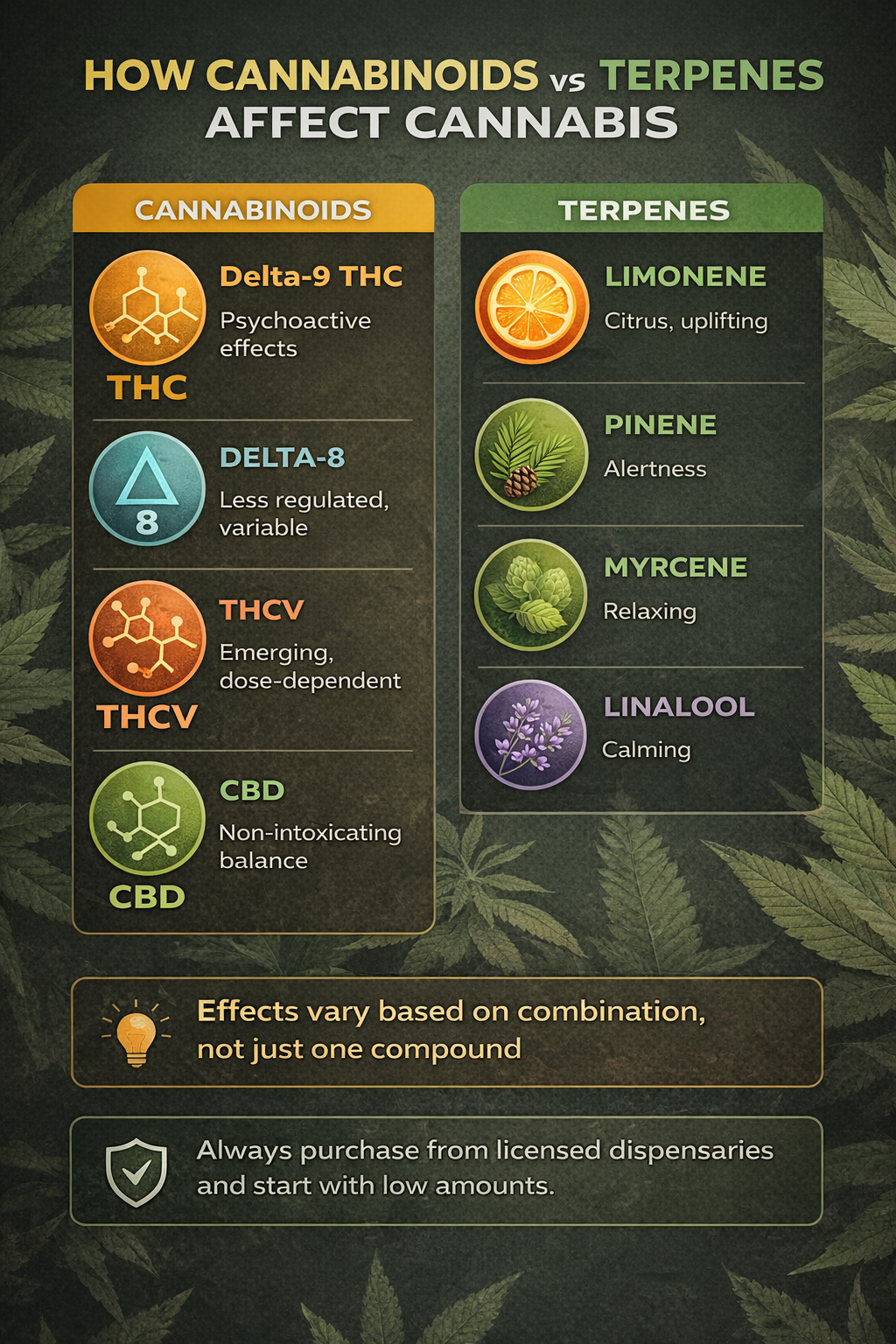
Infographic: Cannabinoids vs Terpenes
What Are Cannabinoids?
Delta-9 THC is the primary psychoactive compound in cannabis. It interacts with receptors in the brain and is responsible for the effects commonly associated with being high.
Delta-8 THC is chemically similar to Delta-9 but is typically produced from hemp-derived CBD. Some consumers report milder effects, though products are not evaluated by the FDA and may vary in quality. Learn more from the FDA consumer update.
THCV is a lesser-known cannabinoid that behaves differently depending on dose. Early research suggests it may influence appetite and metabolism, but human evidence remains limited.
CBD is non-intoxicating and is often studied for its potential to balance some effects of THC. Some research suggests it may influence appetite and body weight, though findings are not consistent.
Why Terpenes Matter
Terpenes are compounds responsible for the aroma of cannabis. They are also found in foods and plants such as citrus fruits and herbs. Common examples include:
- Limonene is often associated with citrus scent and uplifting qualities
- Pinene is commonly linked to alertness and focus
- Myrcene is often associated with relaxing effects
- Linalool is found in lavender and associated with calming properties
Research into terpene effects is still developing. Their influence may vary depending on the individual and the combination of compounds present.
Appetite and Cannabis Compounds
THC is commonly associated with increased appetite due to its interaction with CB1 receptors. CBD and THCV are being studied for potential appetite-related effects, though current evidence is still limited and varies across studies.
For more detail, see our guide on cannabis and appetite.
Cannabis and Pain
Some evidence suggests cannabis may support pain management in certain chronic conditions. Balanced THC and CBD products are often discussed in this context. However, responses vary and cannabis is not a universal solution.
Always consult a healthcare professional when considering cannabis for pain or other medical concerns.
Energy, Focus, and Relaxation
Effects commonly described as energizing or relaxing are often influenced by terpene profiles rather than traditional strain labels. Products with limonene or pinene may feel more stimulating, while those with myrcene or linalool may feel more calming.
Learn more in our guides on energy and focus and relaxation.
How These Compounds Interact With the Body
The endocannabinoid system helps regulate several biological functions. Cannabinoids interact with this system, while terpenes may influence how those interactions feel. Because individual biology differs, effects can vary widely.
Starting with small amounts and tracking your experience can help you better understand what works for you.
Legal and Safety Considerations
In New Mexico, adults 21 and older can legally purchase cannabis from licensed dispensaries. Products sold through regulated channels are tested and labeled.
Hemp-derived cannabinoids such as Delta-8 may exist in a regulatory gray area depending on interpretation and enforcement. The FDA has not evaluated these products for safety.
Avoid transporting cannabis across state lines and keep all products securely stored away from children and pets.
Key Takeaways
- THC is the primary psychoactive cannabinoid
- CBD is non-intoxicating and widely studied
- THCV is being researched but remains less understood
- Terpenes contribute aroma and may influence perceived effects
- Effects vary based on the individual and product composition
- Always purchase from licensed dispensaries
FAQs
What is the difference between Delta-8 and Delta-9 THC?
Delta-9 is the primary regulated psychoactive compound. Delta-8 is similar but often produced from hemp-derived CBD and is not evaluated by the FDA.
Do terpenes really affect how cannabis feels?
They may influence perception and experience, but research is still developing and effects vary by individual.
Can cannabis help with pain?
Some evidence supports its use in certain situations, but results vary and professional guidance is recommended.
Is cannabis legal in New Mexico?
Yes. Adults 21 and older can purchase cannabis from licensed dispensaries within the state.
Pingback: Medical vs Recreational Dispensaries in New Mexico
Pingback: Sativa vs Indica vs Hybrid: New Mexico Guide
Pingback: How to Spot Quality Cannabis Flower Before You Buy
Pingback: Cannabis Tinctures 101: Benefits & Dosing
Pingback: Infused Pre-Rolls in Carlsbad & Hobbs NM
Pingback: Cannabis Topicals vs Transdermal Patches: Know Before You Buy
Pingback: What Is 710? Cannabis Oil Day Explained
Pingback: Microdosing THC in New Mexico: Beginner Guide
Pingback: Cannabis Concentrates Explained: Wax, Resin & Rosin
Pingback: Terpenes for Energy and Focus: What Cannabis Labels Can Tell You
Pingback: Live Resin vs Rosin: What’s the Real Difference?
Pingback: THCA vs THC: Heat, Labels & Total THC Explained
Pingback: Blunt vs Joint: Wraps, Tobacco & Nicotine Explained
Pingback: Cannabis Terpene Chart: Aromas, Flavors & Effects Guide
Pingback: Weed Trichomes Explained: Clear, Cloudy & Amber Trichomes