
Last Updated: September 11, 2026. Cannabis science, product testing, and industry terminology continue to develop. This guide is for adult consumer education and is not cultivation, medical, or legal advice.
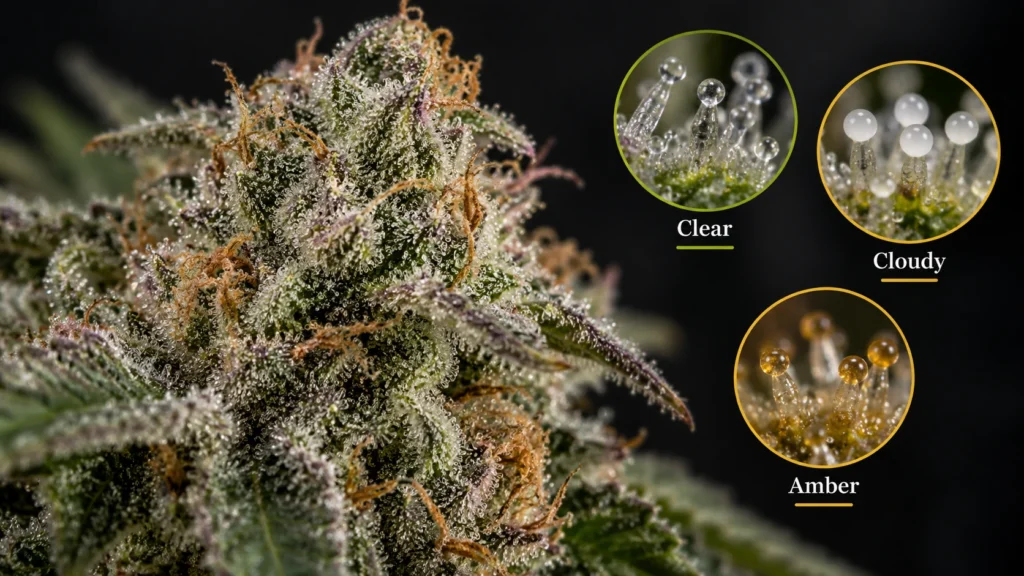
If a cannabis bud looks sugar-dusted under the light, you are seeing one of the plant’s most useful little structures: trichomes.
Under magnification, many glandular trichomes look like tiny stalks topped with rounded resin heads. Those heads hold much of the cannabinoid- and terpene-rich resin people associate with cannabis flower. Microscopic resin factories is a fair description. Parking remains terrible.
That makes trichomes worth looking at. For shoppers, the useful question is how much those visible glands can actually tell you about the finished flower. The answer is: quite a bit about surface structure and handling, and much less about measured potency.
What Are Weed Trichomes?
Think of trichomes as part of the plant’s surface hardware. Many plants grow them. Cannabis has glandular and non-glandular types, with the resin-rich glandular forms doing most of the work shoppers care about here.
On female flowers, those glands cluster heavily on the bracts and nearby “sugar leaves.” Secretory cells make specialized compounds, and a cavity inside the head stores resin containing cannabinoids and terpenes.
That is the source of the familiar sparkle on a well-preserved bud. Under good light, the resin heads catch the eye fast. The plant did not raid the baking aisle.
Are all cannabis trichomes the same?
Scientific literature commonly describes several glandular forms, including stalked, sessile, and bulbous trichomes. The large stalked heads on female flowers draw the most attention because they contain abundant resin and are highly active in cannabinoid and terpene production.
You do not need microscope credentials at the dispensary. The useful takeaway is that the visible frost comes largely from resin-bearing structures, and their condition can change with genetics, maturity, drying, storage, and physical handling.
What Do Cannabis Trichomes Look Like?
With the naked eye, you see frost. Under magnification, you start seeing structure.
Many glandular trichomes resemble tiny mushrooms or lollipops: a rounded head lifted above the plant surface by a narrow stalk. That head is where much of the interesting chemistry is produced and stored.
Retail flower has already been through a lot before you see it. Harvesting, drying, packaging, transport, and ordinary handling can flatten heads, break them, make them stick together, or knock them off entirely. A fresh-plant microscope photo and a dried bud from a jar are therefore different snapshots of the same structure.
Use the close-up for surface clues. Trichome coverage and condition are visible. Measured potency, contaminants, and the full batch profile still come from testing and the product label.
Weed Trichome Chart: Clear, Cloudy and Amber
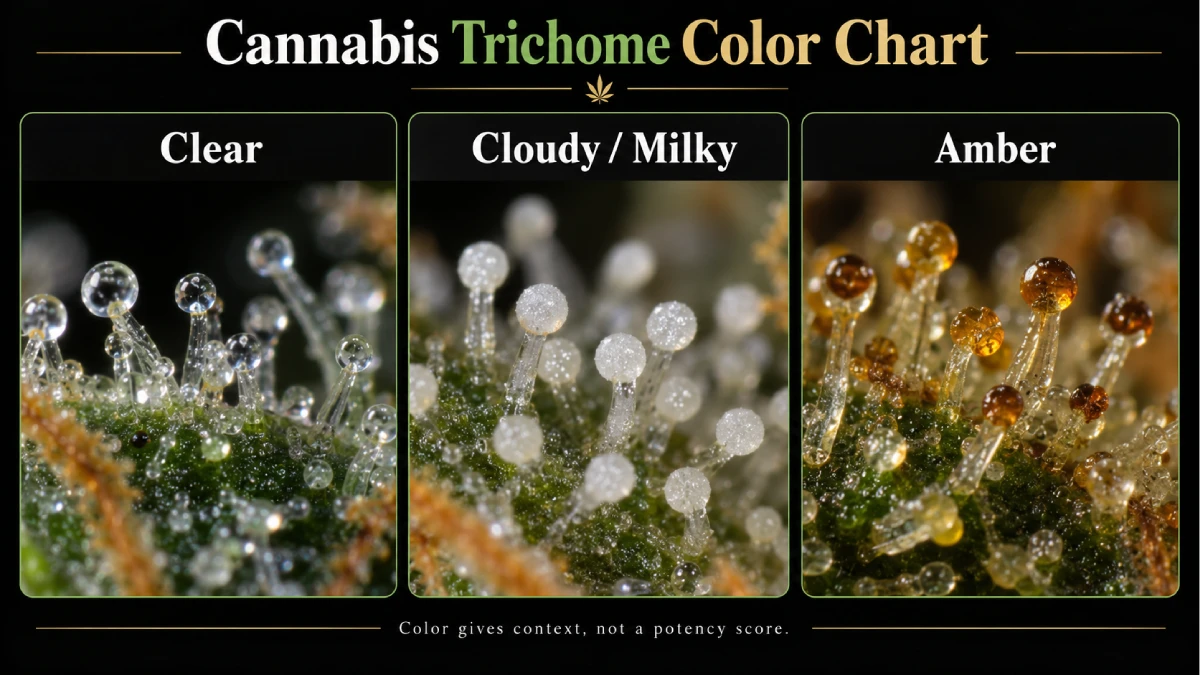
Clear. Cloudy. Amber. Those three words dominate trichome photos online, and there is a real botanical basis for them. Researchers have documented glandular heads progressing from translucent toward cloudy or milky and later amber or brown during flower development.
| Appearance | What it commonly describes | What a shopper should know |
|---|---|---|
| Clear / translucent | An earlier visible stage in glandular-head development. | Useful for understanding plant maturation, but not a standalone potency score for packaged flower. |
| Cloudy / milky | A later opaque stage documented as trichome heads mature. | The cloudy look does not guarantee a particular THC percentage, flavor, or effect. |
| Amber / brown | A later maturation and senescence-associated stage in glandular heads. | Some amber color can occur with maturity, but browning can also be influenced by age and other factors. Read the product as a whole. |
Here is the part that gets lost in color charts: one flower can carry trichomes at more than one stage at the same time. Genotype and plant age influence development, and drying changes appearance after harvest. For a shopper holding finished flower, the overall pattern is useful context. A simple color count is much less precise than it sounds online.
Clear vs. Cloudy vs. Amber Trichomes: What Does the Science Actually Support?
The documented part is the color progression. Controlled observations show glandular heads moving from clear or translucent toward cloudy or milky, then amber or brown as the flower and trichomes mature.
Exact potency or effect predictions go beyond what that visible trait can support. A cloudy head does not reveal the tested THC percentage, and an amber head does not come with a dependable mood setting.
A few details explain why:
- Genetics matter. Different genotypes can develop different trichome numbers, stalk lengths, and maturation patterns.
- Development is asynchronous. One flower can carry trichomes at more than one stage at the same time.
- Post-harvest handling matters. Drying can alter trichome morphology, and mature heads can collapse or detach.
- Color is only one visible trait. Cannabinoid concentration, terpene composition, trichome integrity, and lab testing provide information that color alone cannot.
Use the colors as botanical context. Leave the crystal-ball work to somewhere with mood lighting and a velvet tablecloth.
What Do Trichomes Actually Produce?
This is where the frost starts earning its reputation. Cannabis glandular trichomes are major sites for producing and storing resin compounds, including acidic cannabinoids such as THCA and CBDA, many terpenes, and other specialized metabolites.
Inside the glandular head, secretory cells make those compounds while a storage cavity accumulates the resin. “Biochemical factory” sounds dramatic until you see how much work fits into something that small.
Cannabinoids
On fresh, unheated flower, cannabinoids commonly appear in acidic forms such as THCA and CBDA. Heat and time can change that chemistry after harvest.
If the alphabet soup on the label is the confusing part, Bud Board’s Cannabinoids and Terpenes Guide gives the wider map. The THCA vs. THC guide digs into why heated cannabis and unheated flower can show different cannabinoid forms.
Terpenes
Open a jar and catch citrus, pine, floral, herbal, earthy, or fuel-like notes? Terpenes help create that aroma profile, and glandular trichomes produce and store many of them.
Aroma is the useful part to read directly from terpene chemistry. Mood claims are much less certain. For a clean comparison of common compounds and their aromas, use the Bud Board Cannabis Terpene Chart.
Why Does Some Cannabis Look Frostier Than Others?
Put two buds under the same light and one may sparkle while the other looks much more subdued. That difference can be real without telling the whole quality story.
Several things shape the frost you see:
- Genetics: Some cultivars develop heavier or more visually obvious glandular coverage.
- Where you are looking: Trichome distribution is not perfectly uniform across every part of a flower.
- Maturity: Trichome structure and appearance change during flower development.
- Drying and handling: Resin heads can break, flatten, stick together, or detach.
- Storage: Heat, light, oxygen, time, and rough handling can work against freshness and resin integrity.
- Lighting: Bright directional light can make the same flower look dramatically frostier in a photo than it does in ordinary room light.
Glamour shots are excellent at showing sparkle. Batch testing is what answers the chemistry questions.
Does More Trichome Coverage Mean Better Cannabis?
Heavy frost gets attention for a reason. Dense, intact glandular coverage can be a useful visual clue, especially when the flower also smells fresh, has a healthy texture, and looks well handled.
Quality still takes more than one visual clue. A 2025 scientific review on trichome-density measurement found that comparisons are difficult because cannabis anatomy varies and standardized measurement methods remain limited. Trichome size, maturity, flower structure, and the exact tissue being measured can all shift the result.
Potency adds another layer. A photo can show resin coverage. It cannot tell you exactly how much of each cannabinoid is in the finished batch. That measurement belongs to the lab.
Use visible trichomes as one clue alongside aroma, freshness, texture, cleanliness, cure, packaging, dates, and tested cannabinoid information. Bud Board’s Quality Cannabis Flower guide walks through that full checklist.
Trichomes vs. Kief: What Is the Difference?
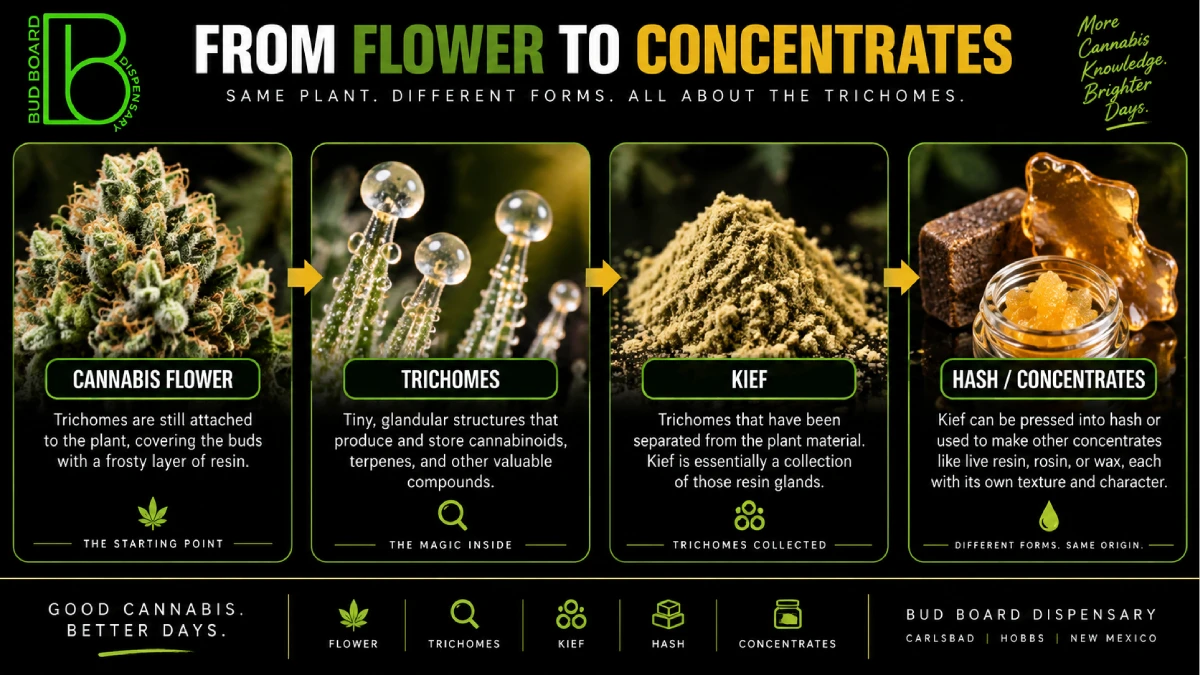
Here is the cleanest distinction: trichomes are structures on the plant; kief is trichome-rich material that has separated from the flower.
Open the bottom chamber of a grinder and find fine golden or tan powder? That material contains detached resin heads and fragments rather than intact glands standing on the bud.
| Term | What it means | Where you see it |
|---|---|---|
| Trichomes | Tiny plant structures, including glandular forms that produce and store resin compounds. | Attached to flower, bracts, and nearby plant tissue. |
| Kief | Loose, separated trichome-rich material. | As sifted material, on flower, or collected after resin heads and fragments separate from plant material. |
For the full breakdown of dry sift, grinder collection, potency, storage, and kief vs. hash, read What Is Kief?
How Trichomes Connect to Kief, Hash and Other Concentrates
If the concentrate aisle starts to feel like vocabulary soup, start with the trichome.
Cannabis flower carries glandular resin heads. Once resin-rich material is separated and concentrated, it can become the starting point for products such as kief and hash. Other processes collect or refine cannabinoids, terpenes, and resin compounds in different ways.
The process behind the product matters. Bud Board’s Cannabis Concentrates Explained guide covers wax, shatter, hash, resin, rosin, and other formats. If two nearly identical words are currently ruining your afternoon, Live Resin vs. Rosin handles that particular vowel problem.
What Should a Cannabis Shopper Actually Check?
At the counter, trichomes are one clue in a bigger picture. A wider check gives you a much better read on the flower:
- Freshness: Does the flower look and smell fresh rather than faded, dusty, or stale?
- Aroma: Is there a clear, normal cannabis aroma for the cultivar or product?
- Texture: Does the flower feel appropriately cured rather than powder-dry or suspiciously wet?
- Trichome condition: Can you see intact resinous coverage, or does the flower look heavily rubbed and stripped?
- Cleanliness: Avoid fuzzy growth, webbing, insects, strange debris, or anything that looks unlike normal plant resin.
- Label: Check the tested cannabinoid information, dates, manufacturer details, and required tracking information.
If you only remember one shopping rule, make it this: let the frost catch your eye, then let the batch label settle the potency question. Bud Board’s New Mexico Cannabis Label Guide explains what those numbers actually mean.
Can You Judge Trichomes With a Phone Camera?
Yes, sometimes. Modern phones with macro modes or clip-on macro lenses can reveal glandular heads that are hard to see with the naked eye.
What you gain is surface detail. Potency, terpene percentages, contaminants, and freshness still require other evidence, especially lab testing and the product label.
Lighting can also change the story. Side light makes resin glands sparkle, digital sharpening exaggerates edges, and enough zoom can turn “frosty” into “Arctic expedition” in a hurry.
Can Trichomes Break Off?
Yes. Glandular heads are tiny physical structures, so handling matters. Research has documented collapsed, stuck-together, and detached heads after maturation and drying.
By the time flower reaches a shopper, repeated crushing, shaking, rubbing, or poor storage may have changed its surface. A few missing heads do not automatically condemn a batch, but heavily rubbed flower tells you something about how it has been treated.
At home, protect flower from excess heat, light, air, and rough handling, and keep it secured away from children and pets. Bud Board’s Safe Cannabis Storage Guide covers the broader setup.
Key Takeaways
- Trichomes create the frost. Glandular types on female flowers produce and store cannabinoid- and terpene-rich resin.
- Clear, cloudy, and amber are real maturation descriptions. They are useful visual context rather than a retail potency meter.
- Appearance changes for several reasons. Genetics, plant age, tissue location, drying, storage, and handling all matter.
- More sparkle is only one clue. Aroma, freshness, texture, cleanliness, and tested batch information still belong in the quality check.
- Trichomes stay attached to the plant; kief has separated from it. That one distinction clears up a surprising amount of concentrate vocabulary.
- For packaged cannabis, the batch label beats the glamour shot.
Weed Trichomes FAQ
What are weed trichomes?
Weed trichomes are tiny structures on the cannabis plant. Glandular types on female flowers produce and store resin containing cannabinoids, terpenes, and other specialized plant compounds.
Why do cannabis buds look frosty?
Dense glandular trichomes and their resin create much of the frosty or crystal-like appearance. Genetics, maturity, handling, and lighting can all change how dramatic that frost looks.
What do clear trichomes mean?
Clear or translucent heads are commonly associated with an earlier visible stage of trichome development. On dried retail flower, treat the color as context rather than a potency score.
What do cloudy or milky trichomes mean?
Cloudy or milky heads represent a later opaque stage documented during flower maturation. That appearance does not reveal a specific THC percentage or predictable consumer effect.
What do amber trichomes mean?
Amber or brown heads are associated with later maturation and senescence. Age, genotype, development, and post-harvest conditions can all influence the finished appearance.
Do amber trichomes mean more CBN?
Amber color is often discussed alongside aging and cannabinoid degradation, but the color of an individual head does not reveal the exact CBN content of a finished batch. Use laboratory-tested cannabinoid information when that detail matters.
Are more trichomes always better?
Heavy coverage can be a positive visual clue. Overall quality still depends on freshness, cleanliness, aroma, cure, handling, and tested batch information.
Are trichomes the same as kief?
Trichomes are structures attached to the plant. Kief is loose, separated trichome-rich material containing resin heads and fragments.
Do trichomes contain THC?
Glandular trichomes are major sites where cannabinoid compounds are produced and stored. On unheated flower, much of the potential THC may be present in acidic forms such as THCA.
Do trichomes contain terpenes?
Yes. Glandular trichomes produce and store many terpenes that contribute to cannabis aroma and flavor.
Can trichomes fall off cannabis flower?
Yes. Resin heads can collapse, break, or detach during maturation, drying, storage, and physical handling.
Can a phone camera show trichomes?
A strong macro mode or clip-on macro lens may reveal trichome coverage and surface detail. Exact potency still requires laboratory testing.
Research Sources
- Tanney et al. (2021), Cannabis Glandular Trichomes: A Cellular Metabolite Factory
- Hancock, Livingston & Samuels (2024), Building a Biofactory: Constructing Glandular Trichomes in Cannabis sativa
- Punja et al. (2023), Glandular Trichome Development, Morphology, and Maturation Are Influenced by Plant Age and Genotype
- Sutton, Punja & Hamarneh (2023), Characterization of Trichome Phenotypes to Assess Maturation and Flower Development
- Bracts, Buds, and Biases: Uncovering Gaps in Trichome Density Quantification and Cannabinoid Concentration in Cannabis sativa L.
Shop Current Menus
Ready to put the label-reading part into practice? Adults 21+ can browse Bud Board’s current Carlsbad and Hobbs menus online and place a pickup order with their preferred location.