Last Updated: September 2026. Cannabis terminology, product formulations, device designs, testing rules, and laws can change. This guide is educational and written for adults 21+.
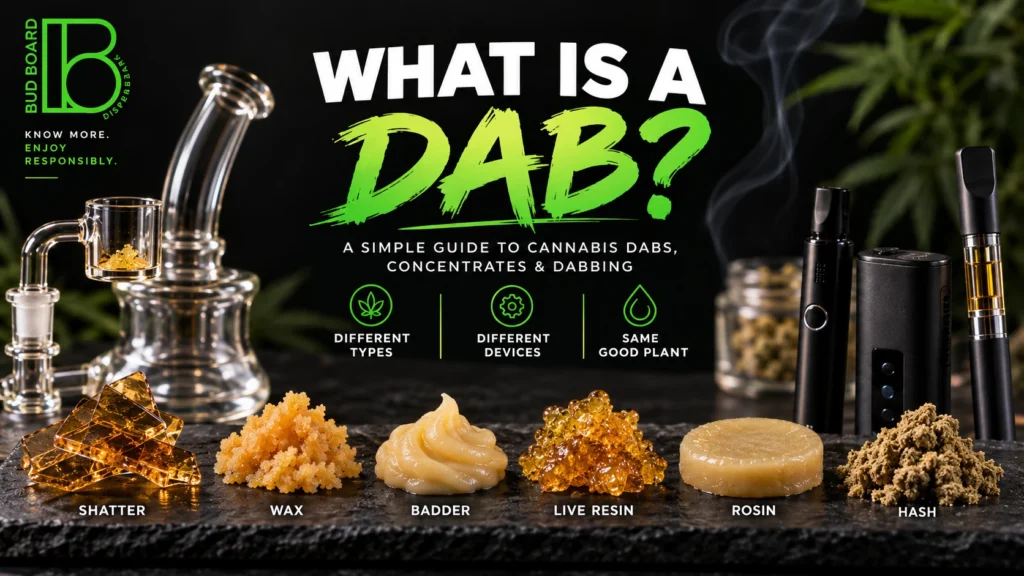
A dab is a small portion of cannabis concentrate intended for a compatible vaporizing device.
That answer takes one sentence. The concentrate shelf has chosen to make the rest more interesting.
Wax, shatter, badder, live resin, rosin, hash, sauce, diamonds, vape oil, dab pens, rigs, e-rigs. Some of those words describe texture. Some describe processing. Others describe hardware. A few get used so loosely that two people can say “dab pen” and picture different devices.
This guide sorts the vocabulary by what it actually means, with one goal: help a shopper understand the product before the tiny jar starts acting mysterious.
What Are Cannabis Dabs?
One word, two jobs.
In everyday cannabis language, a dab is a small amount of concentrate used with compatible vaporizing hardware. The word can also describe the act itself. The material may be “a dab,” while using it is “dabbing.”
The CDC describes dabbing as inhaling cannabis oils, concentrates, or extracts. Scientific papers use the same basic idea: a concentrated cannabis product is heated or vaporized, and the resulting aerosol is inhaled.
What the word does not tell you is what is inside the concentrate. A dab could be wax, shatter, live resin, rosin, hash rosin, badder, sugar, sauce, or another compatible concentrate. Product names still matter.
Fast definition: Concentrate is the category. A dab is a portion of concentrate or the act of using certain concentrates with dab-compatible hardware.
Why Are They Called Dabs?
The name is cannabis slang built around a plain-English idea: a dab is a small amount.
That casual name stuck because many concentrates are physically used in small portions. It is useful retail vocabulary, but it is not a precise chemistry term and it is not the category New Mexico uses for purchase limits. The state calls the regulated category cannabis concentrate.
That distinction sounds picky until a menu puts “dab,” “wax,” “live resin,” and “concentrate” in the same paragraph. Then it earns its keep.
Dabs vs Cannabis Concentrates: What’s the Difference?
Think of cannabis concentrate as the umbrella term.
A dab is one way a compatible concentrate may be portioned or used. The wider concentrate category also includes products formulated for cartridges, infused products, and other applications.
| Term | What it usually means | Useful shopper distinction |
|---|---|---|
| Concentrate | The broad category of cannabis products with concentrated cannabinoids and other plant compounds. | Includes many products beyond jarred dabs. |
| Dab | A small portion of a compatible concentrate, or the act of vaporizing it. | Describes use more than manufacturing method. |
| Extract | A concentrate produced through an extraction process. | Often points toward how material was separated from the plant. |
| Vape oil | A concentrate formulation designed for compatible cartridge or vaporizer hardware. | Do not assume jarred concentrate and cartridge oil are interchangeable. |
If you want the entire concentrate family tree, Bud Board’s Cannabis Concentrates Explained guide owns that broader topic. This page stays focused on dabs, dabbing terminology, and how the device categories differ.
Common Types of Dabs
This is where menus start sounding like someone gave a pastry chef access to a laboratory.
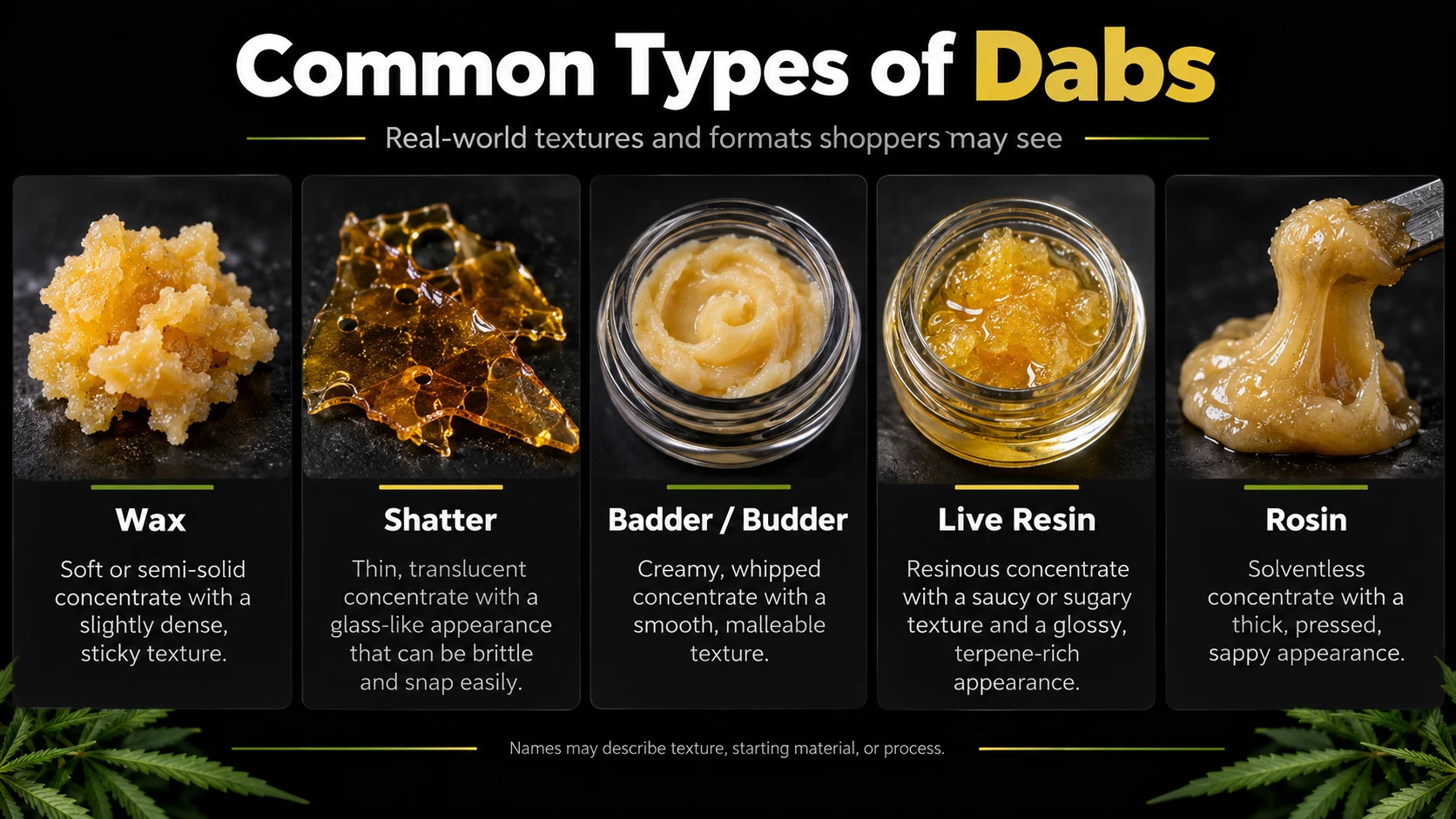
The useful shortcut is to ask what each name actually describes. Some names mainly describe texture. Others tell you more about the starting material or production method.
Wax
Wax is a broad texture term for a soft or semi-solid concentrate. It may look dense, sticky, whipped, or crumbly depending on the product.
Shatter
Shatter is typically thin, firm, and glass-like. The appearance can be dramatic, but clarity and brittleness do not prove potency or purity by themselves.
Budder or Badder
Budder and badder usually describe softer, whipped, creamy, or batter-like consistencies. The spelling is less important than the actual product label.
Live Resin
Live resin usually starts with cannabis frozen soon after harvest and is generally made through a solvent-based extraction process. It can appear as badder, sugar, sauce, or other textures.
“Live” describes the fresh-frozen starting material. It does not mean the jar is literally alive, and it does not guarantee that the product is newer at the moment you buy it.
Rosin
Rosin is made with heat and mechanical pressure rather than an extraction solvent. Flower, kief, or hash can be used as starting material. Live rosin commonly begins with hash made from fresh-frozen cannabis.
For the one-letter difference that creates an unreasonable amount of confusion, see Live Resin vs Rosin.
Hash and Other Solventless Concentrates
Hash is a broad family of concentrated cannabis resin products. Some hash formats may be intended for compatible vaporizing devices, while others are sold for different uses. “Solventless” describes the production method. It does not function as a universal quality or safety grade.
Information-gain shortcut: Wax, shatter, badder, and sugar often tell you more about consistency than strength. Live resin and rosin tell you more about process. The tested batch tells you the potency.
What Does a Dab Look Like?
There is no single “dab look.”
A concentrate can be glassy, creamy, crumbly, sticky, oily, granular, saucy, or crystalline. Color can range from pale yellow and gold to amber, brown, or other shades depending on starting material, processing, formulation, age, and storage.
That makes appearance useful for identifying texture. It is much weaker as a quality score.
A translucent piece of shatter is not automatically purer than an opaque badder. A pale concentrate is not automatically stronger than a darker one. A glossy jar photo still cannot tell you the tested cannabinoid content.
The batch label wins another round.
How Are Dabs Typically Used?
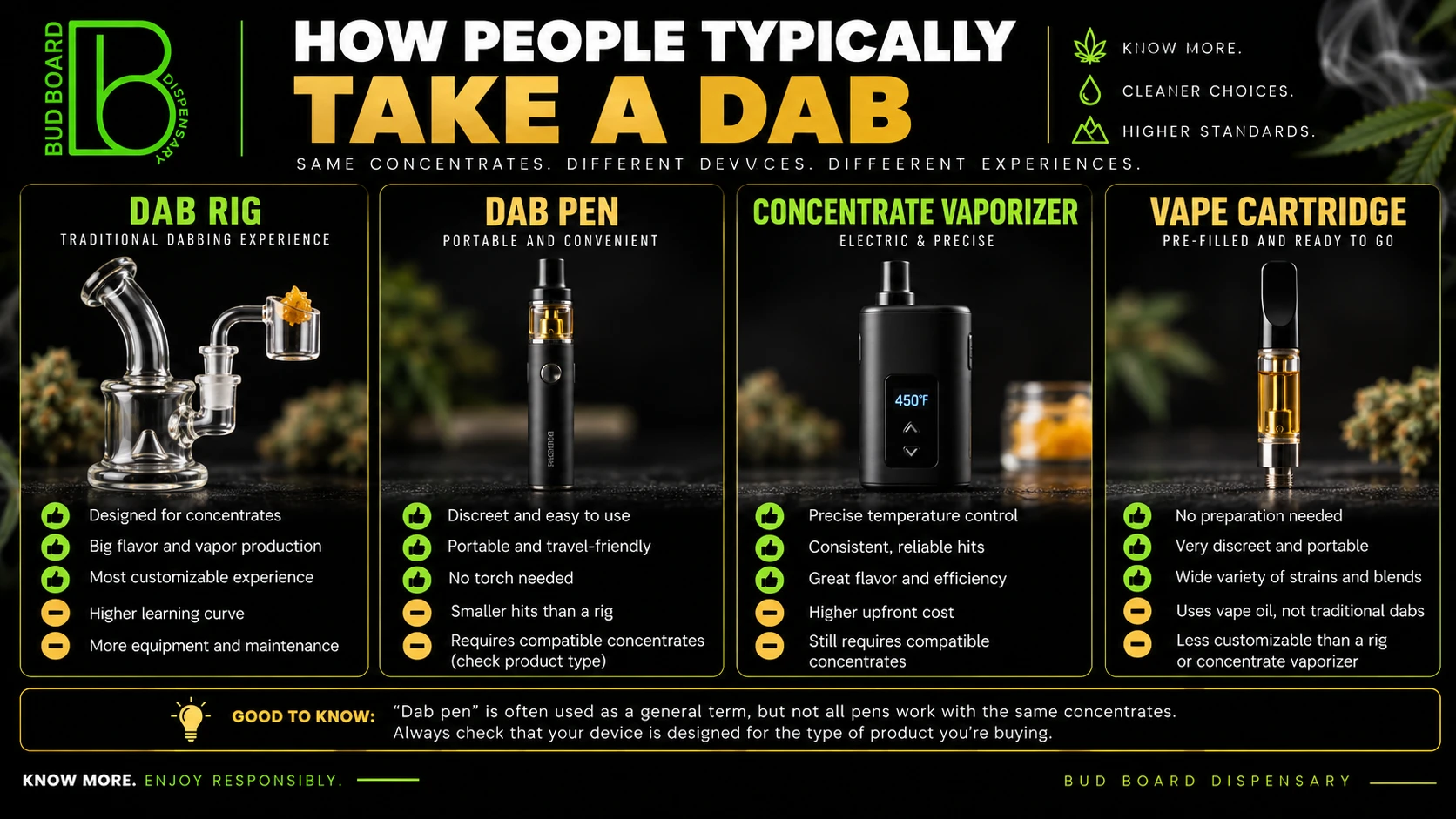
Dabs are used with hardware designed for compatible cannabis concentrates. That can include traditional rigs, electronic rigs, portable concentrate vaporizers, and some pen-style devices.
The hardware heats the concentrate and creates an inhalable aerosol. Device designs vary, so compatibility matters. Check the product and device instructions before pairing them.
We are deliberately stopping there. There is no consumer-education benefit in turning this article into a temperature chart or a home-extraction manual.
Dab Rig vs Dab Pen vs Concentrate Vaporizer
The hardware vocabulary can be more confusing than the concentrate names because retail slang is not perfectly standardized.
| Device term | What it usually describes | Important distinction |
|---|---|---|
| Dab rig | A water-pipe-style device with a concentrate-compatible heated surface or electronic heating component. | Built around loose concentrate rather than a prefilled cartridge. |
| Dab pen | A portable pen-shaped device designed for concentrates. | The term is used loosely. Confirm whether the device accepts loadable concentrate or a cartridge. |
| Concentrate vaporizer | A broader category of electronic devices built to vaporize compatible concentrates. | Can include pen-style devices, portable units, and electronic rigs. |
| Cartridge vape | A battery used with a prefilled or compatible oil cartridge. | The oil is formulated for cartridge hardware and should not be treated as interchangeable with every jarred concentrate. |
“Dab pen” is the troublemaker in that table. One store may use it for a loadable wax pen. Another shopper may use it for almost any small cannabis vaporizer. Check the actual hardware and instructions rather than trusting the nickname.
Are Dabs Stronger Than Cannabis Flower?
Concentrates used for dabbing often contain a higher concentration of THC than cannabis flower, so a small-looking portion can still represent substantial THC exposure.
The CDC specifically warns that concentrates used in vaping and dabbing can contain highly concentrated forms of THC. Research published in 2025 also found that, among regular legal-market cannabis users studied, dabbing was associated with higher plasma THC concentrations and stronger subjective effects than modes typically associated with flower.
Potency still varies by batch. THC concentration is one part of the picture. Amount used, device, prior experience, frequency of use, and individual biology can also change the experience.
Do not let portion size fool you. A dab can look tiny because the product is concentrated. Compare the tested label before treating “small” as “mild.”
Dabs vs Vape Cartridges
Both can involve vaporizing cannabis concentrates. The product format and hardware are different.
Jarred dabs are loose concentrates such as wax, live resin, badder, or rosin used with compatible concentrate hardware.
Vape cartridges contain a cannabis oil formulation inside cartridge hardware. That oil may be distillate, live resin, or another formulation designed to flow and function inside the cartridge.
These categories overlap chemically, but the packaging and device compatibility are not interchangeable. Do not assume a concentrate in a jar belongs in cartridge hardware.
For the chemistry and product-positioning difference between two common oil categories, see Live Resin vs Distillate. Bud Board’s Weed Vapes Guide covers cartridges and cannabis vaporizer terminology in more depth.
Dabs vs Kief and Hash
Same resin family, different labels.
Kief is loose, trichome-rich material separated from cannabis flower. Hash is a broader family of concentrated resin products. Dab describes a portion of compatible concentrate or the way it is vaporized.
That means some hash or rosin products may be sold in a dab-compatible format. Loose kief is still kief. Calling everything resinous a dab would erase information shoppers actually need.
For the plant structure behind all of this, read Weed Trichomes. For separated trichome material, see What Is Kief?
What Should First-Time Concentrate Shoppers Look For?
Start with the jar, then the hardware. You do not need to memorize every concentrate nickname before shopping.
A Seven-Point Dab Checklist
1. Product Type
Is it wax, shatter, badder, live resin, rosin, hash, or another concentrate? Start with what the jar actually says.
2. Device Compatibility
Confirm the product is intended for the hardware you have. “Concentrate” does not mean universal fit.
3. Tested Potency
Read the THC, THCA, CBD, and other tested cannabinoid information instead of guessing from texture or color.
4. Ingredients
For formulated products, check what else is in the package. The category name does not tell you every ingredient.
5. Batch and Dates
Review manufacturer, batch, package or production dates, and traceability information where listed.
6. Storage
Follow the manufacturer’s storage directions. Some concentrate textures and aromatic compounds are more sensitive to heat and age.
7. Your Experience
If concentrates are new to you, say so. A budtender can explain product format, label information, and compatible hardware without turning the counter into a pop quiz.
A terpene-rich product can smell impressive, but aroma is only part of the batch. Bud Board’s Cannabis Terpene Chart explains common aroma compounds without pretending a terpene name guarantees an effect.
Cannabis Concentrate Safety and Responsible Use
Small Portion, Concentrated Product
A dab can look tiny while still containing a substantial amount of THC. Physical size is a poor guide to intensity when the product is concentrated.
- Buy regulated products from licensed retailers. Product testing and traceability matter more with concentrated products, not less.
- Read the tested label. High THC concentration can increase intoxicating effects and the risk of overconsumption.
- Use only compatible hardware. Follow the product and device manufacturer instructions.
- Keep the amount conservative if you are inexperienced. Avoid treating the small physical size of a concentrate portion as a measure of mildness.
- Do not drive after using THC. Impairment affects judgment, attention, coordination, and reaction time.
- Keep cannabis secured away from children and pets.
- Do not attempt homemade volatile-solvent extraction. Fire and explosion hazards are well documented, and there is no reason to turn a shopping guide into a chemistry accident.
Aerosol and Device Safety
Current research shows that vaping and dabbing concentrates can generate potentially harmful aerosol compounds. The evidence is still developing, so broad claims that one inhaled cannabis method is simply “safe” go beyond what the research supports.
New Mexico Rules to Know
New Mexico note: Adult-use customers must be 21 or older. The state currently allows an adult-use consumer to purchase up to 16 grams of cannabis concentrate at one time. Cannabis consumption must occur in a private residence or a licensed consumption lounge, not in public or while driving. Cannabis purchased in New Mexico cannot legally be carried across state lines.
Want to Compare Current Concentrates in Carlsbad or Hobbs?
Adults 21+ can browse Bud Board’s current Carlsbad and Hobbs menus online and place a pickup order with their preferred location.
Inventory changes, so we do not assume a specific wax, shatter, resin, rosin, or other concentrate is always available. Use the Bud Board locations and online ordering page to check the live menu.
Key Takeaways
- A dab is a small portion of cannabis concentrate, or the act of vaporizing that concentrate.
- “Concentrate” is the broad product category. “Dab” describes a portion or method of use.
- Wax, shatter, badder, live resin, rosin, and some hash products can all appear in dab-compatible forms.
- Texture names such as wax, shatter, and badder do not automatically tell you potency.
- Dab rigs, concentrate vaporizers, dab pens, and cartridge vapes are related device categories with important compatibility differences.
- Concentrates used for dabbing often contain more THC by weight than cannabis flower.
- A physically small dab can still represent a substantial amount of THC.
- For first-time shopping, compare product type, device compatibility, tested potency, ingredients, batch information, and storage instructions.
- Buy from licensed retailers, avoid impaired driving, and keep cannabis secured away from children and pets.
What Is a Dab? FAQ
Dab Basics
What is a dab?
A dab is a small portion of cannabis concentrate, or the act of vaporizing it with compatible hardware. Common examples include wax, shatter, badder, live resin, rosin, and some hash concentrates.
Are dabs the same as cannabis concentrates?
Concentrate is the broad product category. Dab usually refers to a small portion of compatible concentrate or the act of vaporizing it.
Is wax a dab?
Wax is a concentrate texture that can be sold for dabbing when the product is intended for compatible concentrate hardware. Check the package and device instructions rather than assuming every product is interchangeable.
Is rosin a dab?
Rosin is a solventless cannabis concentrate. Many rosin products are sold in dab-compatible forms, but “rosin” describes how the concentrate is made while “dab” describes a portion or method of use.
Devices and Potency
What is a dab pen?
A dab pen usually means a portable pen-shaped vaporizer designed for cannabis concentrates. The term is used loosely, so confirm whether the device accepts loadable concentrate, cartridges, or another product format.
Is dabbing the same as vaping?
Dabbing is one form of cannabis vaporization that uses concentrates. “Vaping” is broader and can also describe cartridge systems or devices used with cannabis flower.
Are dabs stronger than flower?
Dab concentrates often contain more THC by weight than cannabis flower, although exact potency varies by batch. Check the tested label rather than assuming every concentrate is stronger than every flower product.
What does a dab look like?
There is no single appearance. Dab-compatible concentrates may be glassy, creamy, sticky, crumbly, saucy, granular, or crystalline depending on the product and consistency.
Can you put a dab into a vape cartridge?
Do not assume jarred concentrate belongs in cartridge hardware. Cartridge oils are formulated for compatible cartridges, while loose concentrates are designed for other device types. Follow the product and device manufacturer instructions.
Shopping and New Mexico
What should a beginner look for when buying dabs?
Start with the product type, tested potency, device compatibility, ingredients, batch information, dates, and storage instructions. If concentrates are new to you, tell the budtender so they can explain the label and format clearly.
How much concentrate can an adult buy in New Mexico?
New Mexico currently allows an eligible adult-use consumer to purchase up to 16 grams of cannabis concentrate at one time. Rules can change, so verify current guidance with the New Mexico Cannabis Control Division.
Research and Official Sources
- CDC: About Cannabis
- CDC: Cannabis Frequently Asked Questions
- CDC: Understanding Your Risk for Cannabis Use Disorder
- Mode Matters: Cannabis Administration, THC Plasma Concentrations and Subjective Effects
- Cannabis Concentrate Vaping Chemistry: 2025 Review
- Cannabis Vaporisation: Understanding Products, Devices and Risks
- New Mexico Cannabis Control Division: Adult Use
- New Mexico Cannabis Control Division: Cannabis FAQs
- New Mexico RLD: Yes and Knows
The Jar Is Small. The Vocabulary Doesn’t Have to Be.
Once you separate product category, texture, process, and hardware, dabs get much easier to understand. Start with the exact concentrate, read the tested label, confirm device compatibility, and ask questions when the menu starts speaking fluent dessert.
Adults 21+ can browse Bud Board’s current Carlsbad and Hobbs menus online and place a pickup order with their preferred location.
Pingback: What Is Bubble Hash? How It Differs From Kief, Rosin & Other Concentrates - Bud Board Dispensary