Last reviewed November 11, 2026. This guide uses “weed” to mean dried cannabis flower, as shoppers commonly do.
Hash vs Flower: Quick Comparison
Swipe sideways to see the full table.
| Feature | Weed / flower | Hash / hashish |
|---|---|---|
| What it is | Dried cannabis buds, with plant tissue and trichomes together | Collected, concentrated cannabis resin material, usually made from separated trichomes |
| Composition | Flower structure, including bracts and other plant material, with resin glands on the surface | Higher proportion of resin glands and their contents; some plant particles may remain |
| Appearance | Recognizable buds, sometimes ground or broken | May be sandy, crumbly, soft, sticky or pressed into pieces |
| Common names | Flower, bud, weed, marijuana | Hash, hashish, cannabis resin, pressed hash |
| THC potency | Varies by cultivar, batch and testing result | Often higher per gram; exact levels vary widely |
| What the name can’t tell you | Freshness, quality or specific effects | Purity, processing method, potency or specific effects |
Both products come from cannabis. The difference is how much of the original bud remains in the finished material. A flower package contains the dried plant structure. Hash concentrates material from the resin glands growing on that plant.
What Is Hashish, and What Is It Made From?
Hashish is a traditional cannabis concentrate made from the plant’s resin-bearing glands, called glandular trichomes. These tiny structures are where much of the plant’s cannabinoids and aromatic compounds are produced and stored. They are abundant on cannabis flower.
Traditional hash production separates resin-rich material from the rest of the plant, often by screening or collecting it and then pressing it into a cohesive form. The European Union Drugs Agency describes traditional methods including sieving and rubbing. You can read more about the underlying plant structures in our weed trichomes guide.
Why the composition matters
Imagine two containers made from the same crop. One holds intact flower with the resin glands still attached. The other contains resin-rich material separated from that flower. Because the second contains less of the surrounding plant tissue, cannabinoids can make up a higher percentage of its weight.
That concentration is the reason hash often tests higher in THC. The result still depends on the source flower and how much other plant material stays in the hash. It isn’t a fixed conversion where every gram of flower becomes a predictable amount of hash.
If you’re wondering where loose kief fits into the process, our What Is Kief? guide covers that comparison in detail. What Is Bubble Hash? explains the ice-water variety separately.
Is Hash Stronger Than Weed?
Hash is often more concentrated in THC per gram than flower. That’s a useful general tendency, although any two retail products need their own lab results before you can compare them accurately.
The European Union Drugs Agency’s 2026 report provides an unusually clear real-world comparison. In its 2024 European seized-product data, cannabis resin averaged 24.6% THC, compared with 12% for herbal cannabis. The resin average was about twice the flower average.
Important context: Those numbers describe seized products in Europe in 2024. They are not U.S. dispensary averages, New Mexico potency standards or typical percentages for every kind of modern hash. The same report notes substantial differences between products and markets.
Modern flower can test higher than the flower in that European sample, and some hash products can test considerably higher than the resin average. The specific batch settles the comparison. There’s no need to hold a potency contest between two category names.
A Less Obvious Difference: THC Percentage vs Total THC Amount
THC percentage tells you how much of a product’s weight is attributed to THC under the stated testing measure. It doesn’t tell you the amount in a particular portion until you also know that portion’s weight.
For example, imagine two hypothetical products that both report Total THC, using the same measurement basis:
Swipe sideways to see the calculation.
| Example product | Labeled Total THC | Potential THC in the measured material |
|---|---|---|
| 0.20 g of flower | 25% | 200 mg of material × 0.25 = 50 mg |
| 0.10 g of hash | 50% | 100 mg of material × 0.50 = 50 mg |
The smaller amount of hash contains the same calculated potential THC as the larger amount of flower in this example. That shows what concentration changes. It does not predict how much THC someone absorbs, how a product will feel or what amount an individual should use.
Check which THC number the label reports
New Mexico’s testing rule calculates Total THC from measured delta-9 THC and THCA: Total THC = delta-9 THC + (THCA × 0.877). THCA can convert to THC when heated, and the factor accounts for the difference in molecular weight. Comparing one product’s THCA percentage with another product’s Total THC percentage gives you mismatched numbers. See New Mexico’s testing rule and our TAC vs THC guide.
First compare the same cannabinoid measure. Then compare the weight of the product or portion. A higher percentage describes greater concentration by weight; the total quantity also depends on how much material you’re comparing.
What Does Hash Look Like Compared With Weed?
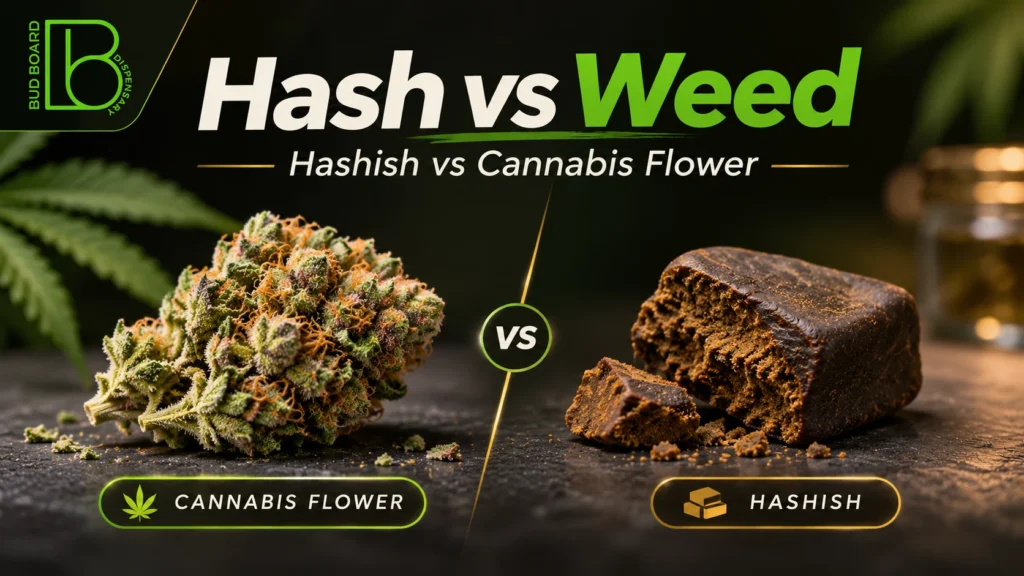
Flower usually has the recognizable shape of a cannabis bud, even after trimming and drying. Hash has a much wider range of textures. Traditional pressed hash may come as a firm block or a soft, pliable piece. Other hash products can be loose or sandy.
Color isn’t a dependable shortcut. Hash can appear golden, tan, brown or dark, depending on the plant material, processing and age. A dark piece isn’t automatically low quality; a pale one doesn’t come with a free laboratory certificate.
Is a compressed cannabis bud the same thing as hash?
No. Compressing whole flower changes its shape but leaves most of the original plant material in place. Hash involves collecting or concentrating resin-rich material. Two products can both look like dense blocks while having very different compositions.
What about hash, hash oil and rosin?
The terms often sit together on concentrate menus, even though they aren’t interchangeable. Traditional hashish describes collected cannabis resin. Hash oil generally refers to an oil extracted from cannabis, often through a different process. Rosin describes resin expressed with heat and pressure from flower or trichome-rich material.
Our Cannabis Concentrates Explained guide covers the wider set of extract names. This comparison stays focused on traditional hashish and dried flower.
Does Hash Feel or Smell Different From Flower?
People sometimes describe hash as having a heavier or earthier aroma, while flower may show more immediately recognizable strain-specific scents. Those impressions aren’t reliable rules. Genetics, handling, storage and the mix of aromatic compounds all affect the finished product.
The same applies to effects. Both products contain cannabinoids from cannabis, and an individual’s response depends on more than the product name. Hash’s higher concentration can matter when equal weights are compared, but there isn’t a scientifically established universal “hash high” separate from every “flower high.”
A helpful menu comparison looks at the tested cannabinoid profile and any available terpene results. Packaging quality and production details also matter. The product’s color is welcome to have an opinion, but it shouldn’t make the decision for you.
What Should You Check When Comparing Hash and Weed?
- Product identity: Is the listing dried flower, traditional hash, loose sift or another concentrate?
- Potency and units: Compare Total THC with Total THC, or the same reported cannabinoid measure, using the batch’s actual results.
- Weight: Check whether the listed number describes a gram, a package or a serving. Percentage and total quantity answer different questions.
- Source and processing: Manufacturer information may identify the starting flower and how the hash was collected.
- Batch details: Review the testing information, dates and storage directions available for that product.
Our How to Read a Cannabis Label guide goes further into the numbers and testing fields found on New Mexico packages.
Hash vs Weed FAQs
Is hash the same as weed?
Both are cannabis products. In everyday shopping language, weed usually means dried flower, while hash refers to concentrated resin-rich material collected from cannabis. Hash belongs to the broader cannabis family but is a different product format.
Is hash always stronger than flower?
No. Hash often has a higher THC concentration by weight, but products overlap and vary by batch. The same THC percentage also doesn’t guarantee identical effects across different products or people.
Why does hash sometimes look like a block instead of a bud?
Hash can be pressed into a cohesive piece after resin-rich material is collected. Flower keeps the original bud structure. A block shape alone isn’t proof that a product contains hash.
Does hash have a different smell?
It can. Concentrating resin and changing how plant material is handled can produce a different aroma. The cultivar, freshness and processing matter more than any universal hash-versus-flower scent rule.
Is traditional hash solventless?
Traditional mechanically separated hash is generally solventless, including material collected through dry sieving or rubbing. The word “hash” may be used loosely in product marketing, so check the producer’s processing description rather than assuming every hash-labeled product was made the same way.
What is the difference between hash and bubble hash?
Bubble hash is a particular hash style made using ice-water separation and filtration. Our Bubble Hash guide explains its texture, grading terms and relationship to rosin without repeating that material here.
Is kief the same as hash?
Kief is loose trichome-rich material that can become a starting material for hash. Our Kief vs Hash discussion explains when the terms overlap and what separates them.
Compare Flower and Concentrates at Bud Board
Bud Board’s cannabis flower page and concentrates page let adults browse product categories and select a Carlsbad or Hobbs store. Hash may appear in concentrate listings, depending on current inventory. Availability and testing results vary by product and location.
Browse FlowerBrowse ConcentratesNeed a specific store? Choose from Bud Board’s Carlsbad and Hobbs locations to view the current menu and pickup information.
For adults 21+ shopping for adult-use cannabis in New Mexico. Follow applicable laws and product directions. Keep cannabis secured away from children and pets, and don’t drive while impaired.
Key Takeaways
- Flower is dried cannabis bud. Hash is collected, concentrated resin-rich material from cannabis.
- Hash often has more THC per gram because it contains a larger proportion of resin glands. Potency varies by batch.
- The 2026 European Drug Report’s resin and flower averages reflect 2024 seized products in Europe, not New Mexico retail inventory.
- Comparing equal THC percentages is different from comparing total potential THC in different product weights.
- Appearance and category names cannot verify purity or quality. Check the tested label and product description.
Research and Sources
- European Union Drugs Agency: Cannabis production and resin extraction. Explains glandular trichomes and traditional hashish production.
- European Drug Report 2026: Cannabis. Reports 2024 European resin and herbal cannabis THC averages and market limitations.
- New Mexico Administrative Code 16.8.7. Sets out required cannabinoid testing and the state’s Total THC calculation.
- Bud Board: What Is Kief?, What Is Bubble Hash? and Cannabis Concentrates Explained provide deeper explanations of adjacent concentrate terms.
Published by Bud Board Dispensary. Hypothetical calculations illustrate labeled THC concentration and do not measure product absorption or predict effects. Reviewed November 11, 2026.