Last updated: July 29, 2026. Cannabis rules, store procedures, training requirements, and job duties can change. This article provides general career and consumer education for New Mexico and is not legal, medical, or employment advice.
A budtender does a lot more than stand behind a counter and say, “This one is popular.” That would be a very short training manual and an even shorter career.
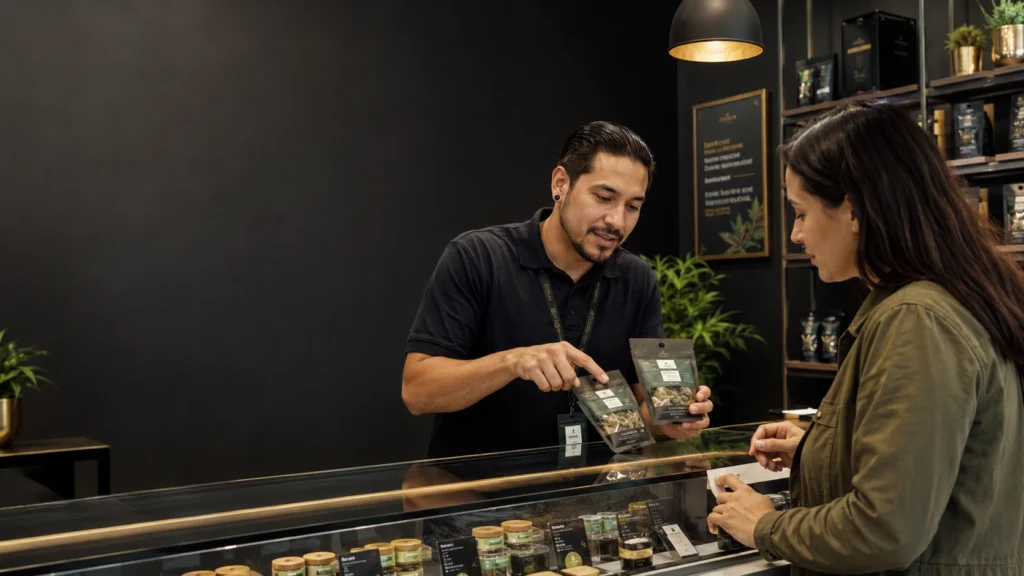
Budtenders are the front-line retail professionals who help customers understand a dispensary menu without turning the visit into a vocabulary exam. They answer questions, compare product formats, explain label information, follow store and state procedures, and help complete legal sales. They also restock, clean, learn new products, watch inventory, and solve the occasional mystery of why three different products all have names that sound like rejected superhero teams.
This guide explains what a cannabis budtender actually does, what the job looks like during a typical shift, which skills matter most, and what New Mexico shoppers and job seekers should know.
What Is a Cannabis Budtender?
A budtender is a customer-facing employee at a licensed cannabis retailer. “Budtender” is an informal industry job title rather than the name of a New Mexico license category. The role is similar to a knowledgeable specialty-retail associate: the employee helps customers understand available products, completes transactions, and follows the dispensary’s compliance procedures.
The best budtenders are approachable without being pushy. They know the menu, but they also know when to slow down, read the label, check the system, or ask a manager instead of making something up. Confidence is useful. Confidently inventing an answer is just improv with a name tag.
The Budtender Job in Four Lanes
Customer Service
Welcome shoppers, listen carefully, ask useful questions, and keep the visit comfortable for beginners and experienced customers alike.
Product Education
Explain formats, package labels, serving information, cannabinoid details, storage instructions, and practical differences without promising a specific outcome.
Compliant Sales
Follow age and identity checks, transaction limits, store procedures, point-of-sale requirements, and rules for medical or adult-use purchases.
Retail Operations
Restock, organize displays, monitor inventory, clean work areas, learn new products, communicate with coworkers, and help the store run smoothly.
What Are a Budtender’s Main Job Duties?
1. Greeting Customers and Setting the Tone
A budtender is often one of the first people a shopper speaks with after check-in. The first job is not to show off product knowledge. It is to make the customer feel welcome and figure out what kind of help they need.
Some shoppers arrive with an exact product in mind. Others know only that they want something smoke-free, easy to measure, or less confusing than the menu currently looks. A good budtender adjusts the conversation instead of giving everyone the same speech.
2. Confirming That a Sale Can Legally Take Place
New Mexico retail rules require a licensed retailer or its employee to confirm a customer’s age and identity before allowing the person to purchase cannabis. Adult-use customers must be at least 21 with valid identification. Qualified medical participants can have different eligibility requirements. The official New Mexico Cannabis Control Division FAQ explains the current age, identification, medical-access, and purchase-limit rules.
Depending on the store’s setup, a dedicated check-in employee may perform the first ID check, while the budtender follows the remaining point-of-sale procedures. Either way, compliance is not optional background music. It is part of the job.
3. Asking Better Questions Before Recommending Anything
A responsible budtender does not begin with, “What is the strongest thing you have ever seen?” unless the customer asked that question first, and even then there should probably be a follow-up.
Useful questions may include:
- Are you shopping for flower, pre-rolls, edibles, tinctures, concentrates, or another format?
- Is this your first time using this type of product?
- Do you prefer a smoke-free option?
- How important are taste, aroma, portability, or ease of measuring?
- Would you like help comparing the labels on two products?
- Do you have a budget or package size in mind?
These questions help narrow the menu without pretending that one product will affect every person the same way.
4. Explaining Product Formats in Plain Language
Dispensary menus can include flower, pre-rolls, infused pre-rolls, vaporizers, concentrates, edibles, beverages, capsules, tinctures, topicals, and more. A budtender should be able to explain the practical differences between these categories, including how they are used, how they are measured, what the package says, and what storage instructions apply.
For a shopper comparing flower, a budtender may point out aroma, texture, freshness, trichomes, and label information. Bud Board’s guide to spotting quality cannabis flower explains why THC percentage is only one part of the comparison.
For someone comparing common menu labels, the sativa, indica, and hybrid guide explains why those categories are starting points rather than guarantees. A good budtender should make the menu easier to understand, not act like a strain name came with a legally binding personality test.
5. Helping Customers Read Cannabis Labels
One of the most useful budtender skills is translating a crowded package into normal language. That may include helping a shopper locate:
- Product type and package size
- Total THC or other cannabinoid information
- Serving size and servings per package
- Ingredient and allergen information
- Manufacturing or expiration information
- Required warnings
- Batch or tracking information
- Storage directions
The budtender’s role is to explain what the label says and how products differ. It is not to replace the label, rewrite the serving instructions from memory, or turn a sales conversation into medical treatment advice.
6. Completing the Sale Correctly
Budtenders commonly use a cannabis point-of-sale system, confirm product selections, apply the correct transaction type, accept approved payment methods, and make sure the purchase stays within applicable limits. New Mexico currently limits an adult-use purchase at one time to two ounces of cannabis, 16 grams of concentrate, 800 milligrams of edibles, or six immature plants, including the applicable cumulative limits described by the state. The New Mexico adult-use cannabis page provides the current limits.
A strong budtender does not treat the register as the easy part. Accurate transactions, product tracking, discounts, taxes, receipts, and inventory movement all matter. One wrong click can create more paperwork than anyone wanted before lunch.
7. Maintaining Product Knowledge
Menus change. Batches change. Brands release new formats. Products sell out. Labels may list different cannabinoid or terpene information from one item to the next. Budtenders need ongoing product education because memorizing the menu once is about as effective as memorizing the weather.
That does not mean every employee must know every detail instantly. Good retail practice includes checking the package, product database, training materials, or a supervisor when the answer is uncertain.
8. Restocking, Cleaning, and Supporting Inventory
Budtending is still a retail job. A shift may include organizing displays, stocking shelves, checking package condition, rotating products according to store procedures, cleaning counters, preparing online orders, reconciling inventory, and communicating low-stock items to the team.
The glamorous side of cannabis retail occasionally includes wiping fingerprints off a display for the third time in 20 minutes. Every industry has its red carpet.
What Does a Typical Budtender Shift Look Like?
- Opening or shift handoff: Review store notes, current promotions, low-stock products, new arrivals, sold-out items, policy reminders, and register assignments.
- Menu check: Look over new products, package details, inventory changes, and anything customers are likely to ask about that day.
- Customer conversations: Greet shoppers, ask practical questions, explain products and labels, and help narrow the menu.
- Compliant transactions: Follow identification, purchase-limit, point-of-sale, payment, packaging, and receipt procedures.
- Retail upkeep: Restock, clean, prepare pickup orders, organize displays, and communicate inventory issues.
- Closing or handoff: Reconcile assigned areas, secure products according to store policy, document issues, and update the next shift.
Real shifts are rarely this tidy. A customer question can turn into a label comparison, the phone may ring, an online order may arrive, and a favorite product may sell out while someone is still describing it. The role rewards people who can stay friendly while changing gears.
Is a Budtender Just a Cannabis Cashier?
No, although cashiering is part of many budtender jobs. A cashier can complete a transaction. A skilled budtender also helps the customer understand the menu, compares package information, follows cannabis-specific compliance procedures, and communicates responsibly about products.
| Role | Primary focus | Typical responsibilities | New Mexico-specific note |
|---|---|---|---|
| Budtender | Customer guidance plus compliant retail sales | Menu education, label comparison, transactions, inventory support, cleaning, and customer service | Cannabis industry employees must be at least 21. Retail training and store procedures apply. |
| General retail cashier | Fast and accurate transactions | Scanning products, accepting payment, receipts, returns, and basic customer service | Does not automatically include cannabis-specific access, purchase-limit, inventory, or product-education duties. |
| Consumption-area server | Offering, selling, or serving cannabis in a licensed consumption area | Service, monitoring the area, following consumption-area procedures, and maintaining compliance | Staff who directly offer, sell, or serve cannabis in a licensed consumption area must hold the required cannabis server permit. |
What a Responsible Budtender Should Not Do
A budtender is not a physician, pharmacist, therapist, attorney, fortune teller, or wizard with guaranteed-effect powers.
A responsible budtender should not:
- Diagnose a medical condition.
- Promise that a product will treat, cure, or prevent a disease.
- Guarantee a particular effect for every person.
- Tell a customer to ignore a clinician, medication warning, product label, or state rule.
- Encourage impaired driving, public consumption, or taking cannabis across state lines.
- Guess when a product detail or legal requirement is uncertain.
- Pressure a customer into buying more than requested.
The most trustworthy answer is sometimes, “Let me verify that.” That sentence is not a weakness. It is what product knowledge looks like when it remembers to bring honesty.
What Are the Requirements to Work as a Budtender in New Mexico?
New Mexico’s Cannabis Control Division states that a person must be at least 21 to work in the state’s cannabis industry. Retailers must also maintain policies, procedures, and employee training covering subjects such as health and safety, security, emergency operations, confidentiality where applicable, and information related to job duties. The current requirements appear in 16.8.2 NMAC.
There is an important distinction between an ordinary retail budtender and a cannabis consumption-area server:
- Retail-only budtender: New Mexico does not describe every ordinary dispensary sales associate as needing the cannabis server permit solely because the person works behind a retail counter.
- Consumption-area service: Employees of a licensed cannabis consumption area who directly offer, sell, or serve cannabis must hold a current cannabis server permit under 16.8.10 NMAC. The rule provides a limited period for a newly employed server who was not previously certified to obtain the permit.
- Role-specific training: Additional requirements can apply based on assigned duties, such as handling edible products or working within a licensed consumption area.
Employers may set stricter hiring standards, require prior retail experience, or provide additional product and compliance training. Job seekers should read the actual posting and ask the employer which permits or certifications apply to that specific position.
What Skills Make Someone a Good Budtender?
- Friendly, patient customer service
- Clear verbal communication
- Active listening
- Comfort reading detailed labels
- Basic math and point-of-sale accuracy
- Attention to compliance procedures
- Ability to learn changing inventory
- Team communication
- Organization and cleanliness
- Calm problem solving
- Good judgment about when to ask for help
- Respect for customer privacy
Deep cannabis knowledge can be learned. Being reliable, teachable, accurate, and kind is harder to fake and usually more valuable than memorizing a hundred strain names before breakfast.
How Can Shoppers Get Better Help From a Budtender?
You do not need to arrive with cannabis vocabulary. A few plain-language details can make the conversation much more useful:
- Tell the budtender whether you are new to cannabis or new to a particular format.
- Say whether you want flower, an edible, a tincture, a pre-roll, or a smoke-free option.
- Ask to compare two labels side by side.
- Mention taste, aroma, portability, serving-size, or budget preferences.
- Ask what is fresh, what is new, or what is currently in stock.
- Ask the budtender to slow down when a term is unfamiliar.
For first-visit logistics, read what you need to buy cannabis in Carlsbad, New Mexico. For a closer look at one smoke-free format, the cannabis tinctures guide explains measurement, labels, storage, and basic use considerations.
What Makes a Great Dispensary Conversation?
A great budtender conversation should leave the shopper more informed than when it started. The customer should understand what the product is, what the package says, how it differs from the alternatives, and which safety or legal reminders matter.
It should not feel like a quiz, a lecture, or a race to the highest number on the label. The goal is a clear, respectful retail experience. At Bud Board, shoppers can visit the Carlsbad and Hobbs locations page to check current locations, hours, directions, and online menus before stopping in.
What Bud Board Budtenders Wish Customers Knew
Budtenders spend enough time helping customers compare products that they quickly learn which details make a conversation easier.
“The most helpful thing a customer can tell us is whether they are new to cannabis or just new to a particular product format. That gives us a much better place to start.”
“A lot of the job is reading labels with customers and explaining the differences between products. Nobody expects a shopper to walk in already knowing every term on the menu.”
“It helps when customers tell us what matters most to them, whether that is the product format, serving size, flavor, aroma, portability, or budget. We can narrow the menu much faster from there.”
Questions Budtenders Hear All the Time
- What is the difference between these two products?
- How do I read this label?
- Which product formats are easiest for a beginner to understand?
- Which products are fresh, new, or currently in stock?
- What can I legally purchase with my ID?
- Can you help me compare serving sizes or package quantities?
Asking for a side-by-side comparison is often the fastest way to turn a wall of product names into an understandable decision.
Key Takeaways
- A budtender is a specialized cannabis retail employee, not just a cashier.
- Core duties include customer service, product education, compliant sales, inventory support, and store upkeep.
- Good budtenders ask questions before suggesting products and explain labels without promising medical outcomes.
- New Mexico cannabis industry employees must be at least 21.
- New Mexico retailers must provide role-relevant training and maintain required policies and procedures.
- A cannabis server permit applies to employees who directly offer, sell, or serve cannabis in a licensed consumption area, not automatically to every retail-only budtender.
- The best budtenders know when to verify an answer instead of guessing.
Frequently Asked Questions
What does a cannabis budtender do?
A cannabis budtender helps customers navigate a licensed dispensary. Common duties include greeting shoppers, checking eligibility, asking questions, explaining product formats and labels, completing compliant transactions, restocking, cleaning, and keeping up with changing inventory.
Is a budtender the same as a bartender?
No. The names sound similar because both roles involve customer service and regulated products, but a budtender works in cannabis retail. A budtender explains cannabis products, follows dispensary procedures, and completes cannabis transactions rather than preparing alcoholic drinks.
Is a budtender a medical professional?
Usually not. A budtender can explain product labels, formats, serving information, and general store education, but should not diagnose conditions, prescribe treatment, or guarantee that a product will produce a medical result.
How old do you have to be to work as a budtender in New Mexico?
The New Mexico Cannabis Control Division states that cannabis industry employees must be at least 21 years old, including employees who participate in the medical cannabis program.
Do New Mexico budtenders need a cannabis server permit?
Not every retail-only budtender automatically needs the consumption-area server permit. Employees who directly offer, sell, or serve cannabis in a licensed cannabis consumption area must meet the cannabis server-permit requirements. Employers may have additional role-specific training requirements.
Do budtenders have to know every strain and product?
No one can reasonably memorize every changing product and batch. A good budtender should know the store’s main categories, understand how to read labels, stay current on inventory, and verify details when uncertain.
Can a budtender recommend a cannabis product?
A budtender can help narrow the menu based on product format, experience level, label details, taste, aroma, serving-size, portability, and other shopping preferences. Recommendations should not be presented as guaranteed effects or medical treatment.
What experience helps someone become a budtender?
Retail, hospitality, customer service, cash handling, inventory, and regulated-industry experience can all help. Employers also value reliability, active listening, attention to detail, willingness to learn, and the ability to follow compliance procedures.
Official New Mexico Sources
Meet the Bud Board Team in Carlsbad or Hobbs
Curious about a product format, package label, current menu, or first dispensary visit? Browse Bud Board’s Carlsbad and Hobbs dispensary locations, check the online menu for your preferred store, and bring valid ID. You do not need to arrive speaking fluent dispensary. Clear questions are welcome, and “Can you explain this label?” is a perfectly good place to start.